

Is Your Process Control System Fully Optimized With the Right Foxboro Module?
In the evolving landscape of industrial automation, process accuracy and system uptime remain the foremost priorities for plant operators and engineering teams. The intelligent deployment of distributed control system (DCS) components, especially those compatible with legacy and modern Foxboro architectures, can significantly influence operational reliability. As industries shift toward seamless interoperability, the role of a specific automation component—the Foxboro module—becomes critical for maintaining signal integrity, executing complex logic, and ensuring redundancy in mission-critical environments. This article explores the technical nuances, application scenarios, and sourcing considerations surrounding this essential building block of process automation.
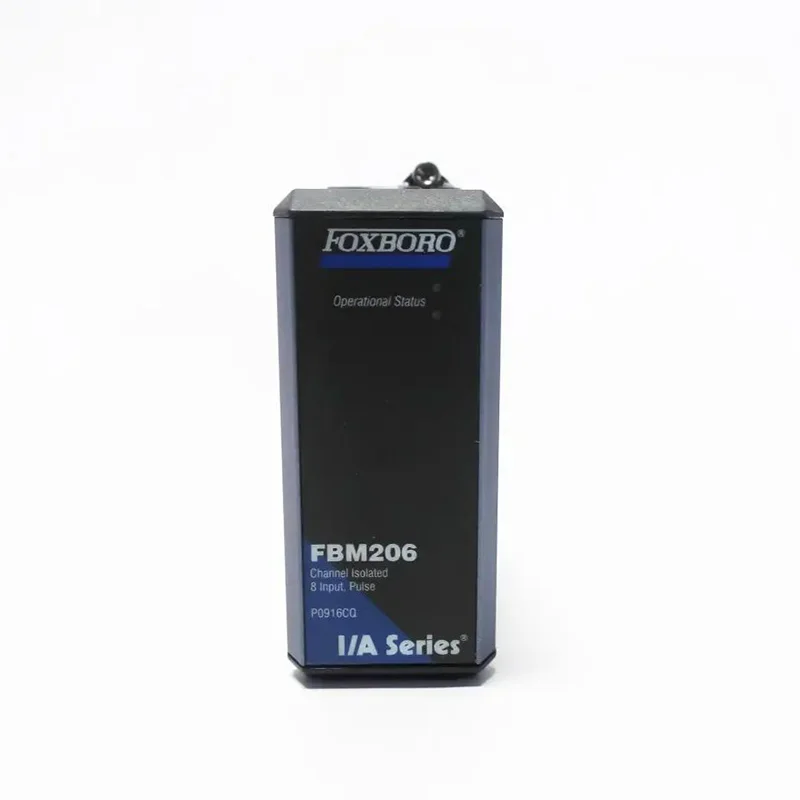
Understanding the Core Function in DCS Architecture
A modern DCS relies on distributed intelligence, where field data is processed closer to the source. The Foxboro module serves as the fundamental interface between field devices and the central control system. These modules handle analog and digital signal conversion, loop regulation, and high-speed communication across control networks. Unlike generic I/O boards, genuine automation components from the Foxboro ecosystem are engineered to withstand harsh industrial conditions including extreme temperatures, electromagnetic interference, and continuous vibration. Facility managers often observe that a failing module introduces latency or data gaps, directly impacting product quality and safety interlocks.
Key Technical Specifications to Evaluate
When assessing any automation part, especially a DCS-dedicated component, several parameters define its suitability for a given process. These include channel density, isolation voltage, response time, and diagnostic capabilities. A robust module integrates on-board fault detection, allowing predictive maintenance teams to identify degradation before a complete shutdown occurs. Furthermore, compatibility with legacy I/O termination assemblies ensures that modernization projects do not require complete rewiring of field junction boxes, reducing both capital expenditure and downtime.
| Feature Category | Typical Requirement for Process Industries | Benefit Provided by Genuine Module |
|---|---|---|
| Isolation | Channel-to-channel and channel-to-backplane isolation | Prevents ground loops and protects control system from field transients |
| Diagnostics | Open wire detection, out-of-range monitoring | Reduces troubleshooting time and avoids unplanned outages |
| Communication Protocol | Foxboro mesh control network or fault-tolerant Ethernet | Ensures deterministic data exchange and redundancy |
| Environmental Rating | Extended temperature range and conformal coating | Reliable operation in chemical, power, and offshore installations |
Common Failure Modes and Lifecycle Management of DCS Modules
Even the highest-grade industrial electronics have finite service lives. Electrolytic capacitor aging, relay contact wear, and connector oxidation are typical degradation mechanisms. When the module begins to show intermittent faults, plant engineers face a decision: repair, replace with refurbished units, or source an original brand new component. Refurbished modules often carry hidden risks such as prior overvoltage damage or undocumented modifications. In contrast, a factory-sealed module eliminates uncertainty regarding previous operating conditions. Lifecycle management strategies now favor maintaining a strategic inventory of critical spare modules to avoid extended production losses.
Proactive Spare Part Strategy
Leading facilities categorize their spare automation components into three tiers: immediate critical spares located on-site, less critical spares available from a regional distribution hub, and obsolete components requiring specialized sourcing. Because the module portfolio includes both active and legacy series—such as the classic I/A series modules—availability varies drastically. A reliable supply partner not only stocks these modules but also verifies revision levels and firmware compatibility. Without careful verification, a module with an incorrect firmware version can trigger communication errors on the control network, mimicking hardware failure.
Integration Challenges
Swapping a module in a live DCS requires meticulous attention to termination details and configuration parameters. Field wiring must match the module’s channel assignment, and the configuration database should reflect the exact module type and calibration settings. Many modernization efforts fail because the replacement module’s serial number or revision is not recognized by the existing control software. A truly brand new component, still in its factory-sealed package, includes the latest firmware and has never been subjected to field stress. This contrasts sharply with used modules that may have undocumented modification histories.
Verification Steps Before Installation
Engineering best practices dictate a pre-installation checklist: visual inspection for damage, verification of part number against the bill of materials, and configuration backup of the existing rack. In complex DCS environments, a seemingly identical Foxboro module may have different keying or termination characteristics. Therefore, referencing the original equipment manufacturer (OEM) documentation remains essential. Additionally, module addressing—whether set by rotary switches, DIP switches, or software assignment—must match the rack’s slot configuration. Overlooking these steps results in diagnostic LEDs displaying fault codes, leading to unnecessary system downtime while troubleshooting.
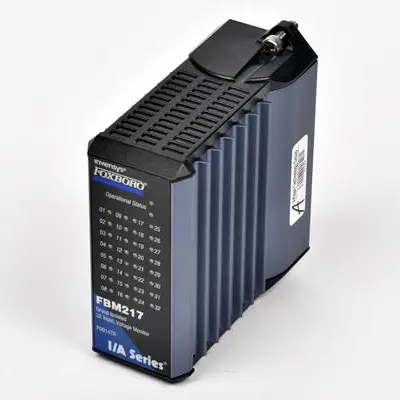
Industry Applications Demanding High Module Reliability
Certain sectors impose stricter demands on automation components. For example, oil refineries use continuous catalytic reforming units where a single module failure can unbalance the hydrogen network. Power generation facilities rely on turbine control systems where I/O modules directly govern fuel valve positions. In each case, the module operates as part of a safety-instrumented system (SIS) or basic process control system (BPCS). Even momentary data loss from a module can trigger spurious shutdowns, with each restart costing significant revenue. Therefore, end users prioritize modules that offer hot-swappable capability and enhanced diagnostic coverage.
Comparative Overview of Module Types
| Module Category | Primary Function | Typical Channel Count |
|---|---|---|
| Analog Input Module | Converts 4–20 mA signals from transmitters | Multiple isolated channels |
| Analog Output Module | Drives positioners and control valves | Multiple channels with HART capability |
| Digital Input Module | Reads switch and proximity sensor status | High-density with interrupt handling |
| Digital Output Module | Controls relays, solenoids, and alarms | Fault-tolerant output stages |
Sourcing Genuine Automation Components: Why Provenance Matters
The secondary market for industrial electronics contains a mixture of surplus new stock, customer returns, and decommissioned pulls. Distinguishing authentic brand new components from cosmetically cleaned used units requires supply chain transparency. Authorized distributors and specialized suppliers like Zhangzhou Rayon Automation Technology Co., Ltd. maintain direct relationships with original manufacturers or authorized liquidation channels. A Foxboro module obtained from such a supplier arrives in original factory-sealed packaging, complete with anti-static protection and traceable serial numbers. This provenance guarantees that the component has never been subjected to improper storage conditions, such as high humidity or electrostatic discharge, which silently degrade semiconductor junctions.
Logistics and Delivery Considerations
When a critical module fails, every hour of downtime adds operational cost. Suppliers with extensive in-country warehouses or strong express partnerships reduce the lead time from days to hours. For global facilities, especially those in remote locations, the ability to ship automation components worldwide with proper export documentation is non-negotiable. Moreover, temperature-controlled logistics prevent condensation inside the module’s enclosure, preserving its factory-fresh condition. Zhangzhou Rayon Automation Technology Co., Ltd. has structured its warehouse operations to support rapid pick-and-pack workflows, ensuring that an urgently needed module can be dispatched within a short window after order confirmation.
Warranty and Post-Delivery Support for DCS Spares
A one-year warranty on all new automation parts provides assurance against latent manufacturing defects. However, warranty coverage must be paired with technical support for configuration queries. When installing a complex module, users occasionally require guidance on termination resistance values or grounding practices. Suppliers that include a commercial sales team and a quality control sourcing team offer a distinct advantage, as they can verify revision compatibility before shipment. This pre-shipment validation eliminates the scenario of receiving a module that passes electrical tests but fails to communicate with older rack firmware. Zhangzhou Rayon Automation Technology Co., Ltd. employs a collaborative backup team that cross-references every outgoing module against industry compatibility databases, a practice that reduces field returns and customer frustration.
Differentiating Between Obsolescence and Active Lifecycle
As process control systems evolve, OEMs periodically announce product lifecycle milestones: active, mature, discontinued, or obsolete. A discontinued Foxboro module may still be available from specialized stockists who purchased the last manufacturing batches. These new-old-stock (NOS) units are distinct from refurbished ones because they have never been energized. Facilities extending the life of their existing DCS without migrating to a new platform rely entirely on these NOS modules. Therefore, supply partners with tens of thousands of new parts in stock serve as critical enablers for plants that cannot justify a full system migration. Zhangzhou Rayon Automation Technology Co., Ltd. has built its reputation by maintaining deep inventory across multiple brands, including a wide selection for both current and legacy systems.
Operational Excellence Through Proper Module Selection
Selecting the correct automation component goes beyond matching model numbers. Engineers must also evaluate the module’s channel-to-channel isolation, update rate, and field power distribution. A mismatch between module capabilities and loop requirements can introduce measurement drift or control oscillation. For example, a thermocouple input module designed for high-precision temperature sensing requires a specific reference junction compensation method. Similarly, a digital output module intended for high-cycle applications uses solid-state relays rather than mechanical relays. Consulting the original datasheet and, when necessary, engaging with a supplier’s technical team ensures that the chosen module aligns with the application’s dynamic response needs. Zhangzhou Rayon Automation Technology Co., Ltd. encourages customers to submit part model inquiries, allowing their specialists to verify alternatives if a direct model is no longer manufactured.
Future-Proofing Your Spare Parts Inventory
With supply chains for semiconductor components experiencing periodic disruptions, maintaining a strategic buffer of critical DCS modules is prudent. A recommended practice is to identify all modules with long procurement lead times—including obsolete or scarce models—and establish a minimum stocking level. When a facility holds its own inventory, the risk of extended downtime due to component unavailability drops dramatically. However, for companies that prefer just-in-time models, partnering with a supplier that guarantees rapid fulfillment is the alternative. Zhangzhou Rayon Automation Technology Co., Ltd. offers flexible support for both approaches, providing modules from stock with consistent quality verification. Their quality control sourcing team ensures that every module shipped meets OEM specifications, including firmware version and hardware revision.
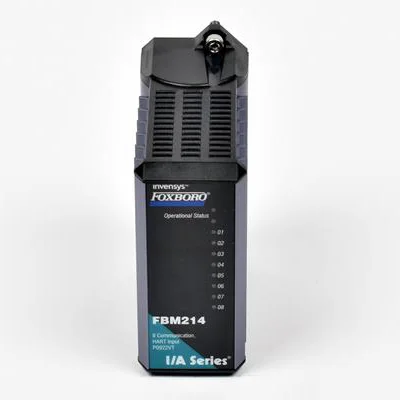
Conclusion: Trusted Supply Partnerships for Critical Automation Needs
The industrial automation sector will always depend on reliable hardware to execute control strategies. The module family, as part of distributed control systems, continues to serve thousands of installations worldwide. Whether upgrading an existing rack or replenishing spares for future outages, the source of that module defines its performance and lifespan. Factory-sealed packaging, rigorous quality verification, and documented traceability separate genuine new components from risky alternatives. Zhangzhou Rayon Automation Technology Co., Ltd. has positioned itself as a dependable supplier of original brand new PLC and DCS parts, including the full spectrum of Foxboro modules. Their integrated teams—commercial sales, warehouse operations, quality control sourcing, and backup support—deliver an unmatched level of service, from initial inquiry to after-sales assistance. With tens of thousands of parts in stock, international shipping capabilities, and a steadfast commitment to customer feedback, the company continues to grow as a trusted name in industrial automation. For any facility manager or engineer requiring a specific module, contacting Zhangzhou Rayon Automation Technology Co., Ltd. ensures access to authentic components backed by a comprehensive one-year warranty and a dedication to fast, efficient delivery worldwide.